Direct Cremation – What It Is and What to Consider
Tagged in:#environmental#funerals#news-updates#other
Direct cremation has become an increasingly common choice in the UK.
Unlike a traditional cremation, there is no attended funeral service at the crematorium. The cremation takes place privately and the ashes are returned to the family afterwards.
For some people, this simplicity feels right. For others, separating the cremation from the farewell gives family and friends more time and flexibility to decide how they would like to remember the person who has died.
So, what exactly is a direct cremation, why are more people choosing one, and what happens afterwards?
What is a direct cremation?
A direct cremation is a cremation that takes place without an attended funeral service.
The person who has died is taken into the care of the funeral provider and later transported to the crematorium. The cremation takes place without family or friends present and, afterwards, the cremated remains are usually returned to the family.
Because there is no service at the crematorium, there is generally no hearse procession, ceremony or gathering beforehand.
This does not mean that there cannot be a funeral, memorial or celebration of life at another time.
Direct cremation simply separates the cremation itself from the way family and friends choose to say goodbye.
Why is direct cremation becoming more popular?
Direct cremation was once a relatively uncommon choice, but this has changed significantly in recent years.
According to SunLife’s 2026 Cost of Dying Report, direct cremations accounted for 21% of funerals in 2025, compared with just 3% in 2019.
The increase became particularly noticeable during the pandemic, when restrictions changed the way funerals could take place, but direct cremation has remained a popular option since then.
There are several reasons why people may choose it.
Simplicity
Some people simply do not want a traditional funeral.
They may prefer the idea of a straightforward cremation followed by something quieter or more personal afterwards.
For someone planning their own funeral, a direct cremation can also reflect a wish for very little ceremony or fuss.
Flexibility
A traditional funeral normally brings the cremation and ceremony together on one particular day.
With a direct cremation, these two things can happen separately.
Family and friends might hold a memorial several weeks later, wait until relatives are able to travel, or choose a meaningful date or location.
There can be less pressure for everything to be organised immediately.
Cost
Direct cremation is generally less expensive than an attended funeral because it does not include many of the services associated with a traditional funeral.
However, cost is not necessarily the only reason someone might choose it. For some people, the simplicity and flexibility are equally important.
Changing attitudes towards funerals
There is no single way that a funeral has to look.
Increasingly, families are choosing arrangements that reflect the person who has died rather than automatically following a traditional format.
For some, that might mean a natural burial. For others, it might mean a direct cremation followed later by a memorial or gathering somewhere meaningful.
What about the environmental impact?
Environmental considerations may also be important when deciding between cremation and burial.
Cremation requires significant heat and energy, and the process produces carbon and other emissions. Modern crematoria are regulated to control emissions, and technology continues to develop, including greater use of electric cremators and improved energy efficiency.
Direct cremation should therefore not be confused with a low-impact or environmentally neutral funeral simply because the service itself is simpler.
For some people, environmental concerns are one reason to consider alternatives such as natural burial. Others may still feel that cremation is the right choice for them, while looking for a natural and lasting way to lay the ashes to rest afterwards.
There is no single choice that will be right for every family. Understanding the environmental implications alongside practical, personal and financial considerations can help you make a more informed decision.
Does direct cremation mean there is no funeral?
Not necessarily.
The cremation itself is unattended, but family and friends can still come together before or afterwards.
In fact, SunLife’s 2026 research found that 86% of people who arranged a direct cremation also held a small gathering, wake, memorial service or a combination of these.
That gathering can take many different forms.
It might be a celebration of life at a favourite venue, a meal with close family, a gathering at home or a memorial outdoors.
Some families hold a more formal ceremony with music, readings and a celebrant. Others prefer something very simple.
Choosing a direct cremation does not remove the opportunity to say goodbye. It simply allows that goodbye to happen separately.
What happens to the ashes after a direct cremation?
Following the cremation, the ashes are usually returned to the person arranging the funeral.
There is no need to decide immediately what to do with them.
Some families keep ashes at home while they consider their options. Others already have a particular resting place in mind.
Ashes can be kept, scattered where permission allows, or buried in a permanent resting place.
You may also decide to incorporate the ashes into a memorial or gathering.
If you would like to explore the different possibilities in more detail, you can read our guide to what you can do with ashes after cremation.
Can ashes be buried after a direct cremation?
Yes.
Although cremation and burial are sometimes thought of as two completely separate choices, cremated remains can be buried afterwards.
This is usually known as an ashes interment.
The ashes are placed into a plot, usually inside a suitable urn or container, providing a permanent resting place that family and friends can return to.
Some families hold a small memorial at the same time as the interment, while others choose a very quiet occasion with only a few people present.
Burying ashes at a natural burial ground
A natural burial ground can provide another option for families who would like cremated remains to have a permanent resting place outdoors.
Rather than scattering the ashes, they can be interred within the natural landscape.
This provides somewhere specific to return to, while the surrounding meadow, woodland or countryside becomes part of the setting.
The interment can also become an opportunity to gather. A family might share some words, listen to a piece of music or spend some quiet time together before the urn is lowered.
Alternatively, it can be kept very simple.
How we inter ashes at Leedam Natural Burials
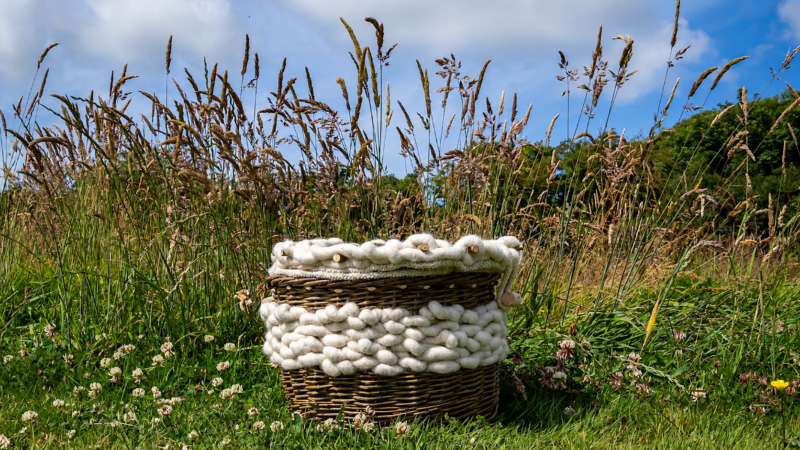
At Leedam, cremated remains can be interred at our natural burial grounds.
We bury ashes rather than scatter them across the burial ground. Each ashes plot provides a permanent resting place within the landscape.
The location of the plot is carefully recorded so that family and friends can find the resting place again in the future, even though our burial grounds do not have rows of conventional headstones.
Depending on the burial ground and the circumstances, it may also be possible for cremated remains to be interred together or alongside a full burial.
Each of our burial grounds is slightly different, so the areas available for ashes interments and the memorial choices offered can vary between locations.
Families are welcome to visit a burial ground before making a decision and explore the landscape for themselves.
Direct cremation or direct burial?
Direct cremation should not be confused with direct burial.
Both offer a simpler alternative to an attended funeral, but what happens afterwards is different.
With a direct cremation, the person is cremated without an attended service and the ashes are returned to the family.
With a direct burial, the person is taken directly for burial without a traditional funeral service beforehand.
Both options can be followed by a separate memorial or gathering if family and friends would like one.
If you are considering burial rather than cremation, you can read our guide to direct burial.
Is direct cremation right for everyone?
Direct cremation will suit some people and not others.
Some families value being present for the cremation service and find the structure of a traditional funeral helpful.
Others feel more comfortable separating the cremation from the memorial and creating their own way of gathering afterwards.
If you are planning your own funeral, it can be useful to discuss your wishes with the people closest to you so that they understand what you would like and how you imagine being remembered.
There is no single right way to arrange a funeral.
Understanding the different choices available can simply make it easier to choose something that feels appropriate for you and your family.
If you are considering laying cremated remains to rest in a natural setting, you can find your nearest Leedam natural burial ground or contact our team to ask about ashes interments.